I had a fun week with these two. One arrangement happened because two calla lilies flat out refused to stand up straight, and honestly, I loved that for them.
The other is just two cosmos doing their own thing while a long looping stem sails right over their heads. Neither one asked for my opinion, and somehow that made both of them better.
Let me show you.
Leaning Out, On Purpose
A little bold, a little off-balance, and I mean that as a compliment.
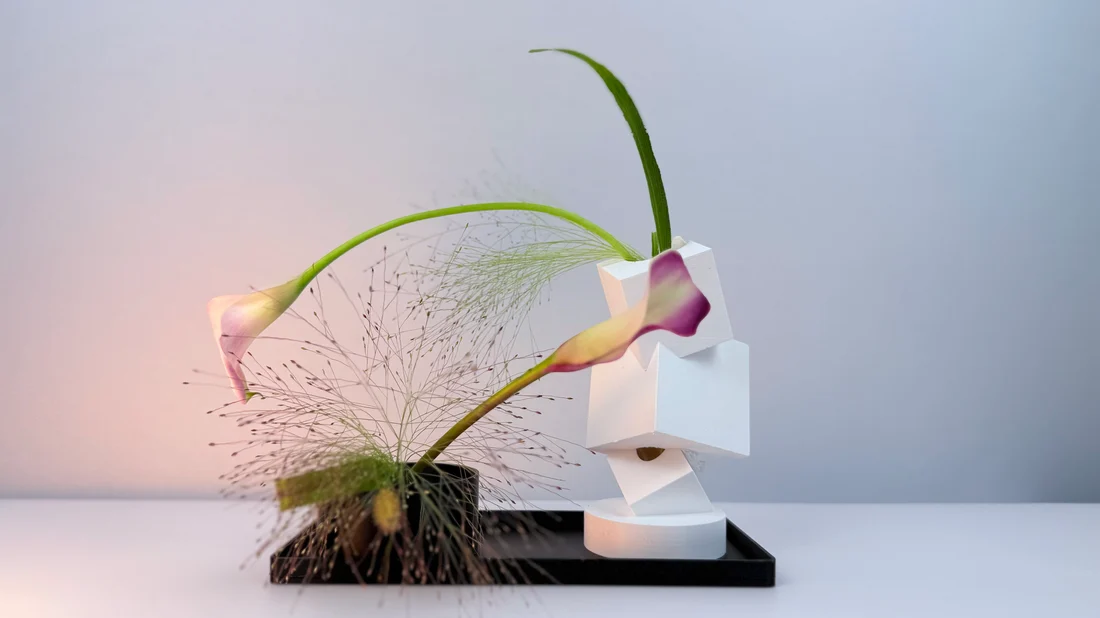
I made this white stand knowing exactly what I wanted, all sharp angles, almost architectural. Built it first, on purpose, before a single flower was even in the room.
Then I picked up two calla lilies, and they just leaned. Didn't ask me, didn't wait for direction, just dropped down and out like they'd already made up their minds without me.
I tried to fight it for about ten seconds. Then I gave up and let both stems curve wherever they wanted. There's a little wispy plant tucked at the base that I honestly threw in last minute, no real plan behind it, and now it might be my favorite part of the whole thing. Funny how that happens.
I'm happy with this one. A little bold, a little off-balance, and I mean that as a compliment.
Two Cosmos
Nothing crowded. Everything just found its spot.
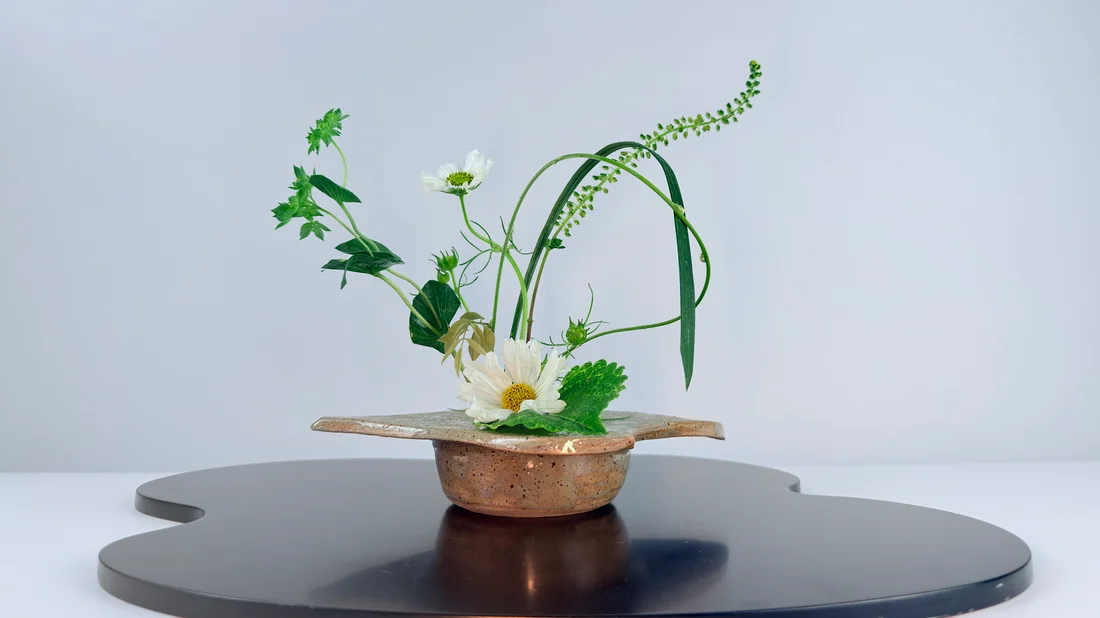
This one started with the ceramic container, that speckled stoneware piece with the wavy edge, sitting on this black tray that looks almost like a puddle somebody forgot to mop up. I loved the shape before a single stem went in.
The tall arching stem became my Shin, looping up and over everything with those tiny seed-like buds trailing along it. My Soe came in lower, a curving vine echoing that same shape, just a lot quieter about it. Then the two cosmos settled in as the Hikae, low and close together, facing slightly different directions like they couldn't agree on where to look. Honestly, relatable.
I like how much air is in this one. Nothing crowded. Everything just found its spot and I didn't have to force a thing.
Quick Ikebana Tip
The Oldest School. The oldest known school of ikebana is called Ikenobo and traces back to a Buddhist priest in the 1400s who arranged flowers at Rokkaku-dō temple in Kyoto. That makes it one of the oldest continuously practiced art forms in the world, still being taught today, over 500 years later.