This week I went from a 15th century Japanese temple all the way to Milan, without leaving my studio.
Two arrangements, two completely different stories, and both of them decided to tell me exactly what they wanted to be. Come see what happened.
Back to the Beginning: Ikenobo
Tall lines, gentle agreement, and a 600-year conversation with flowers.
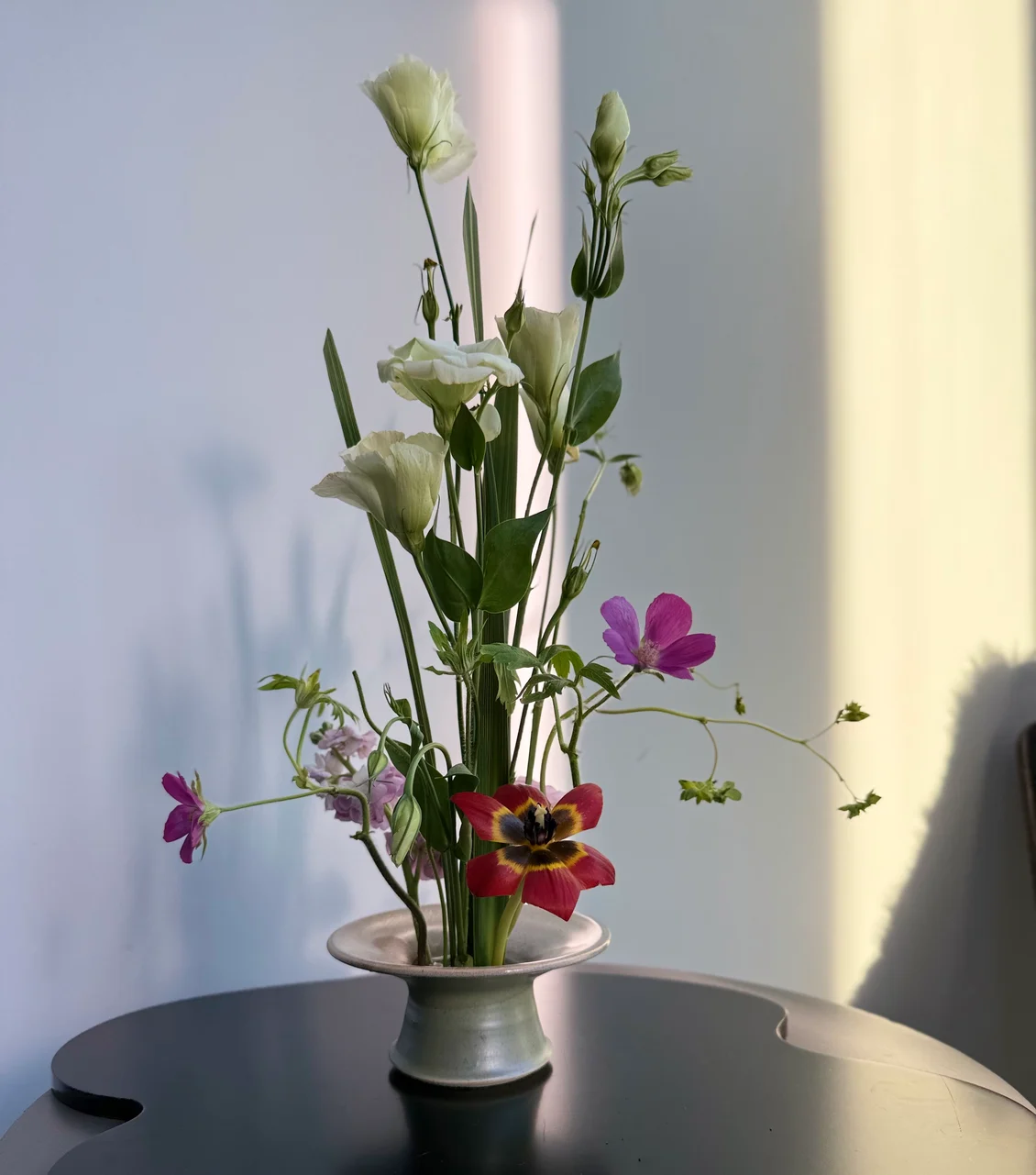
Ikenobo doesn't rush, and neither did this arrangement. The tall lines reach upward to set the spirit of the piece. The supporting stems follow in gentle agreement. And the lower elements settle in quietly to bring it all home.
What I love most about this style is how intentional it feels, you don't just arrange the flowers, you have a conversation with them. And in Ikenobo, that conversation has been going on for over 600 years.
Weekend in Milan
Blue convertible, peach rose at the wheel, and zero cares.
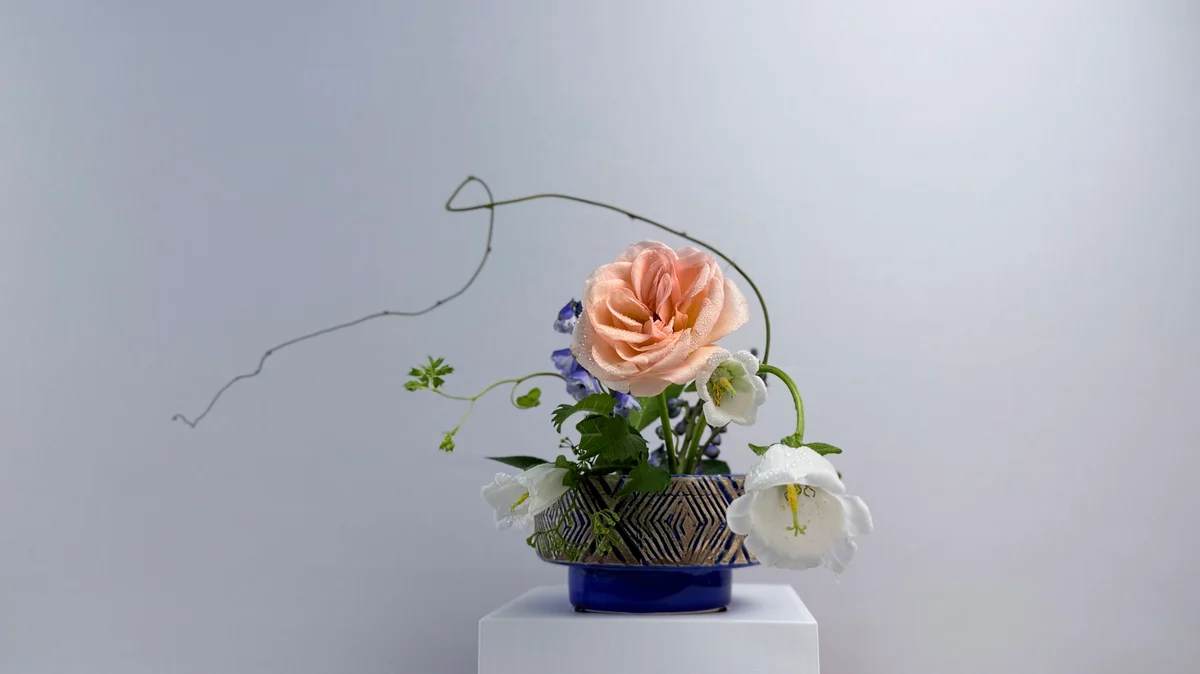
Saturday in Milan. Blue convertible. The peach rose has the wheel, warm, unhurried, taking every corner like she owns the street.
The branch? Both arms straight up in the air, wind everywhere, absolutely zero cares. The white blooms caught the energy immediately and did exactly the same thing.
Nobody is looking at the map. Everyone on the sidewalk is watching them go by.
Quick Ikebana Tip
Did You Know? Ikenobo is the oldest school of Ikebana in the world. It was born in Kyoto over 600 years ago, when a Buddhist monk began arranging flowers at Rokkaku-dō temple as offerings. What started as a sacred practice became the foundation of everything that came after.
Every Ikebana school we know today, including Sogetsu, traces its roots back to Ikenobo. When you arrange flowers, you are part of a very long and beautiful story.